

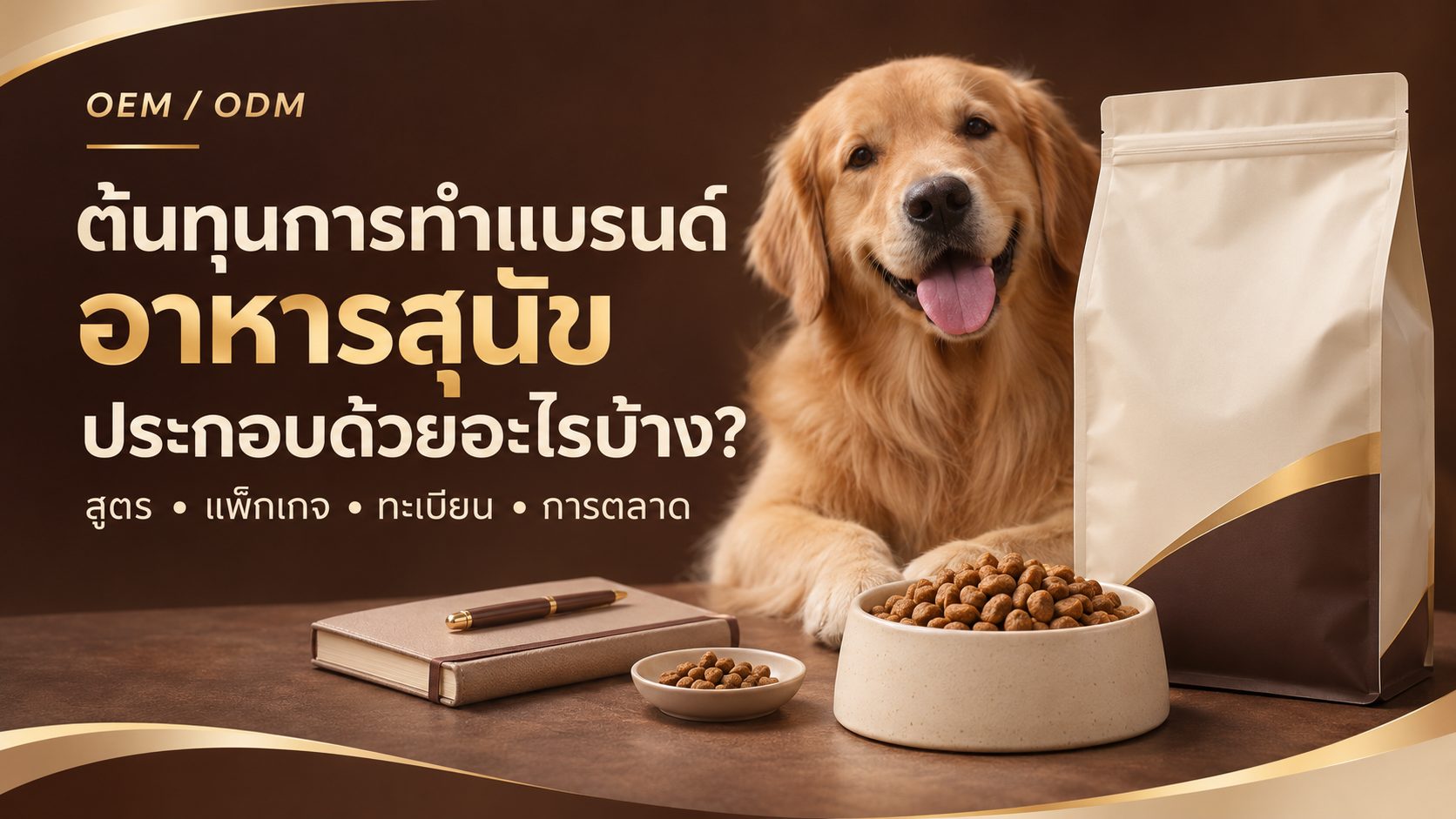
What are the costs involved in branding dog and cat food? Before starting OEM/ODM.
An in-depth look at the costs of creating a dry dog food brand, including formula, production, packaging, registration, and marketing expenses, along with essential information to prepare before consulting an OEM/ODM factory.
What are the costs associated with branding dog and cat food? A deep dive into formula costs, packaging, registration, and marketing.
Want to have your own dog and cat food brand? What budget do you need to prepare? This is a crucial question before starting discussions with a manufacturing factory, because investment planning must cover everything from formula development and producing the first batch of products to building customer awareness and encouraging repeat purchases.
For those looking to create their own dry dog food brand through an OEM or ODM factory, the main costs can be divided into four areas: formula and production, packaging, product registration, and marketing. Understanding the details of each area will help in determining a budget, comparing quotations, and setting appropriate selling prices.
1. Formula and production costs: Start with the product you want to sell.
Before estimating costs, brand owners should clearly define the target group for their dog or cat food, such as puppies/kittens, adult dogs/cats, or senior dogs/cats, as well as the kibble size, main ingredients, nutritional value, and desired selling price range.
These details affect both formula development and production costs, with expenses potentially including:
- The cost of developing or modifying a formula to align with the product concept and target group.
- Costs for producing samples and conducting trial production to evaluate the size, shape, texture, and characteristics of feed pellets.
- Quality testing and product shelf-life assessment costs, based on testing plans tailored to the product.
- Actual production costs, which include raw materials and manufacturing processes within the scope proposed by the factory.
Choosing to use an existing factory's formula versus co-developing a custom formula may involve different costs and timelines. Therefore, it's crucial to clearly inquire about the scope of each factory's OEM or ODM services, including formula rights and future usage conditions.
Another important factor is the minimum order quantity (MOQ). Ordering larger quantities may lower the cost per kilogram, but it requires a larger initial investment and storage space. Brand owners should therefore consider this in conjunction with their projected sales figures and product shelf life.
2. Package costs: Including maintaining quality and brand image.
Packaging for dry dog food must be suitable for maintaining food quality throughout its shelf life, while also supporting transportation and customer use. Therefore, packaging selection should consider materials, size, sealing systems, and printing options.
This expense includes logo and label design costs, packaging bag costs, printing costs, and printing equipment costs according to the chosen method, such as printing plates or printing cylinders, if applicable, as well as shipping box costs.
If you plan to launch multiple packaging sizes, you should estimate the cost for each size separately, as they may have different minimum order quantities (MOQs) and printing setup costs. Furthermore, the MOQ for bags may not be the same as the MOQ for food, resulting in leftover packaging after the first production batch, which must also be factored into your investment.
Before approving for printing, ensure the label text aligns with product information and relevant specifications to minimize costs associated with redesigns or reprints.
3. Registration costs: Separate registration fees from processing fees.
Preparing and selling dog food in Thailand requires consideration of relevant registration and licensing requirements with the Department of Livestock Development. The required registration documents depend on the type and characteristics of the product, as outlined in the Department of Livestock Development's pet food registration guidelines.
The budget assessment for this portion should clearly separate the expenses, including:
- Government fees
- Fees for document preparation and product information verification.
- Analysis fees or related test results.
- Fees for filing and tracking work, if using a third-party service provider.
The Department of Livestock Development's Q&A document states the fee for a registration certificate for specifically controlled animal feed at 1,000 baht per certificate. This figure is one fee item; therefore, it is advisable to check the current rate and request a detailed list of total costs from the Department of Livestock Development before proceeding.
For OEM or ODM manufacturing, it's important to agree with the factory on who is responsible for the registration and application, who is in charge of the documentation, and what services are included in the quotation. If there are any future changes to the formula or product details, inquire about the procedures and potential costs.
Trademark registration is a separate task that should be planned individually, as it has different objectives and procedures from animal feed product registration.
4. Marketing costs: Allocate a budget to give your product opportunities to reach customers.
Once the product is manufactured, the brand owner must also invest in communicating to customers who their dog food is suitable for, what its key features are, and why they should choose to buy it.
An initial marketing budget might cover product photography, video production, content writing, website or online store setup, as well as advertising costs, creator collaboration fees, and product samples with shipping.
In addition, the costs of each sales channel should be calculated, such as platform fees, payment processing fees, promotional discounts, and distributor commissions, as these affect the remaining profit from each sale.
The marketing budget should cover both product launches and ongoing sales, tracking the costs of acquiring new customers and repeat purchases to assess whether pricing and expenses are still appropriate for the business.
Additional expenses to consider before starting a brand.
In addition to the four main cost components, there are also costs for shipping from the factory, storage, packaging and delivery, as well as costs for samples, damaged goods, and unsold products before their expiration date.
Working capital is also crucial, as brands may need to prepare deposits for the next production batch before receiving full payment from the first batch. Therefore, budgeting should be divided into initial costs, first batch inventory, operating expenses, and reserves to provide a complete picture of cash flow.
What information should I prepare before requesting a factory quote?
Having preliminary data will help factories assess production options and budgets more accurately to meet their needs. The following details should be prepared:
- Target dog group and age range.
- Product concept, raw materials, or desired unique selling points.
- Planned selling price and distribution channels.
- Packaging size and initial production volume.
- Investment budget and desired launch timeline.
If you don't have a formula or are unsure about the starting quantity, you can begin by discussing your target customer group, selling price, and budget so the factory can help evaluate your options before deciding to produce.
Start planning your dog and cat food brand.
The cost of branding dog food depends on product details, production volume, packaging, and sales plan. Seeking consultation from the outset will help provide a clearer picture of the investment costs and allow you to choose the best approach for your business.
Interested in creating your own dry dog and cat food brand? Contact us for OEM/ODM manufacturing consultation. Let us know your product concept and initial budget to assess the best approach for formula development, packaging, and brand launch.