

Thailand Pet Food Registration: DLD Steps & Documents
Understand DLD pet food registration in Thailand, including key steps and documents for complete dry dog and cat food OEM/ODM projects.
How to Register Pet Food with Thailand’s Department of Livestock Development: Steps and Required Documents
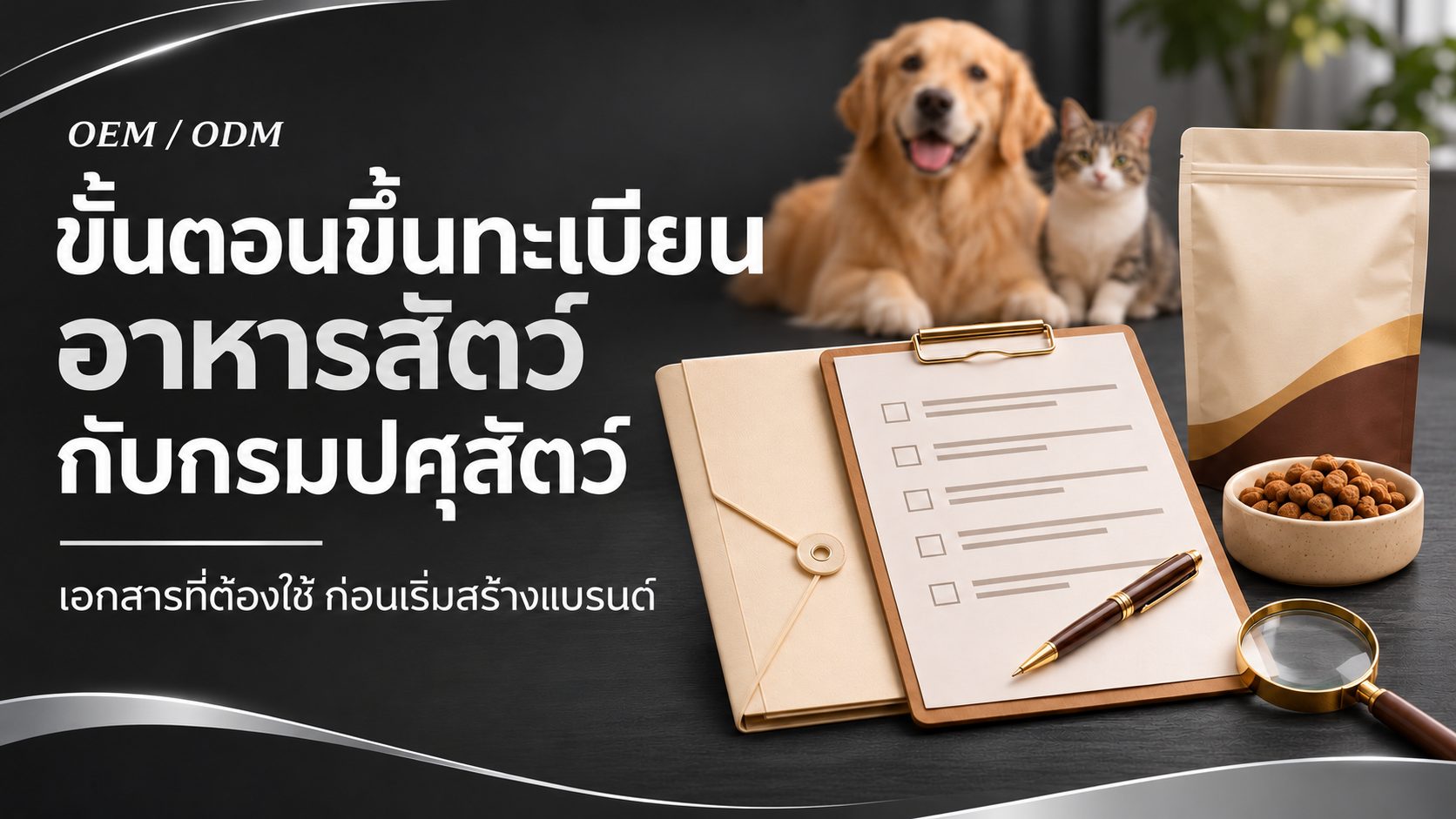
Developing a pet food brand involves more than creating a formula and designing packaging. Before launch, businesses must also prepare the relevant product registration and licensing documentation.
For brands working with an OEM or ODM manufacturer, understanding the registration process helps organize information, coordinate responsibilities, and plan the launch more effectively.
This article focuses on nutritionally complete dry dog and cat food manufactured in Thailand. Imported products, treats, and therapeutic diets require separate consideration.
Manufacturing Licenses and Product Registration Serve Different Purposes
A license to manufacture specifically controlled animal feed concerns the manufacturing activity. A product registration certificate concerns the feed product being registered. A manufacturer’s license therefore does not automatically mean every product it makes is registered.
The DLD distinguishes complete pet food, complementary pet food such as snacks, and therapeutic pet food. Supporting requirements differ by category. Source: DLD Manual on Feed Licensing and Registration
Step 1: Define the Product Category and Responsibilities
Identify the target species, life stage, and intended feeding purpose. This information helps determine the appropriate application category.
For contract manufacturing, clarify the licensed manufacturer’s role, the applicant, and the documentation contact. Agree on responsibilities, fees, and record access before preparing the application.
Step 2: Align the Formula, Analysis, and Product Information
Use a consistent set of information across the product name, formula, ingredients, nutritional data, and label.
If the formula or name changes during preparation, update everyone involved and maintain document version control. This reduces the risk of submitting outdated information or printing packaging based on an earlier specification.
Step 3: Prepare the Supporting Documents
For complete pet food, the DLD manual lists the following core materials:
DocumentKey detailsApplication for product registrationUse the application for the relevant product category.Applicable manufacturing licenseProvide a copy or image of the license.Sample label and label wordingEnsure consistency with the product being registered.Certificate of Analysis, or COAInclude analytical methods.Product and packaging photographsShow the food and its packaging.Manufacturing Process Flow ChartDescribe the production process.Nutrient ProfileProvide the product’s nutritional information.Certificate of Complete Pet FoodUse the applicable supporting document.Metabolizable Energy statementProvide the relevant energy information.Feed additive informationIdentify the names, types, and quantities used.Certificate of FormulaProvide the supporting formula document.Additional materials may be needed depending on the case, including authorization documents, specifications for uncommon or higher-risk ingredients, scientific references or trial reports, and a 500-gram feed sample when required for further assessment. Source: DLD Manual, printed pages 29–30
Use this as a preparation checklist and verify the current category-specific requirements before submission. Imported products and products subject to other processing conditions may need additional documentation.
Step 4: Prepare Access to the Electronic Application Service
The DLD provides electronic feed licensing and registration services through DLD e-Feed. Prepare the user account and business information required by the system, then follow the current service instructions for the relevant application.
Where an authorized representative handles the work, prepare authorization documents appropriate to the role and scope. Access the service through the DLD e-Feed portal.
Step 5: Track the Application and Respond to Requests
Monitor the application status and official messages. If the reviewing officer requests corrections or supporting information, coordinate a complete response with the responsible parties.
A document tracker can help identify missing items, owners, and the latest versions, especially when the brand, manufacturer, laboratory, and packaging designer are involved.
Step 6: Check Registration Details and Launch Readiness
Once the certificate is issued, check its details against the product intended for manufacture and sale. Review the label and any sales licensing requirements applicable to the business model.
The DLD e-Feed portal also provides a public license and registration search. If a record cannot be found or details appear inconsistent, contact the relevant authority for verification. Source: DLD e-Feed
What to Check Before Submission
Before submitting the application, confirm that:
- The product name matches across all documents.
- The formula and nutritional information use the same version.
- Files are complete and readable.
- Signatures and document certification meet the applicable requirements.
- Authorization documents cover the intended activities.
- The checklist matches the product category.
Allow time for preparation and possible revisions when planning the launch. Confirm expected processing arrangements for the specific application rather than assuming one timeline applies to every project.
Plan Your Pet Food Brand with Petpal
Planning the formula, packaging, and documentation together helps coordinate an OEM or ODM project from development through launch preparation.
Contact Petpal to discuss your dry dog or cat food concept, target animals, and intended launch period, including the documentation coordination scope appropriate to your project.
Source information checked for the Thai article on 17 November 2026. Confirm current forms and requirements with the DLD before applying.